
Press Watch UK
Stop the presses! Introducing "Press Watch UK ", a new weekly analysis of the front pages of the top 10 best selling UK newspapers to see what trends they expose about the current media landscape.
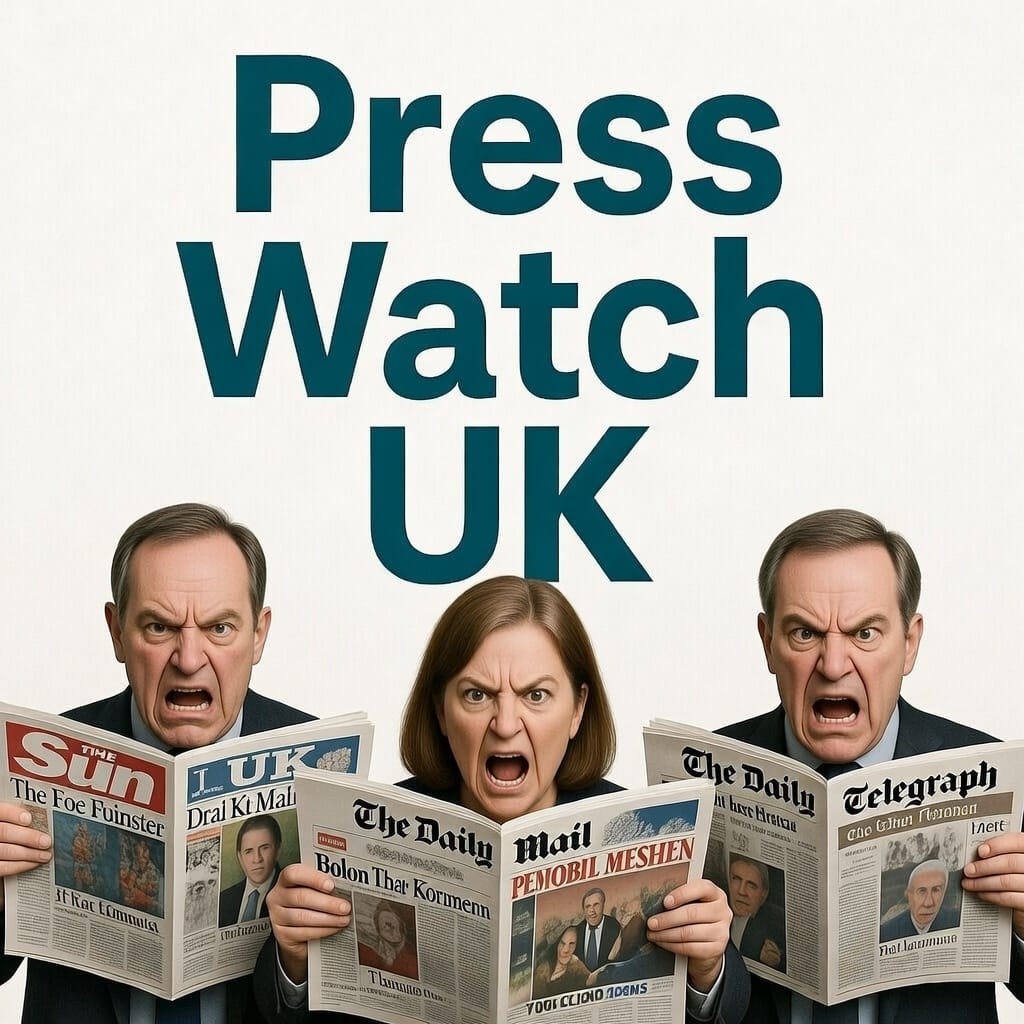
Have you had a chat about politics lately that suddenly turned into a row, because it felt like the other person was living in a different world, not just seeing things differently?
Recent research suggests the UK is now among the most politically tense and culture‑war‑saturated democracies outside the United States. Studies from King’s College London and others show that large majorities of people here feel the country is divided and that clashes between different social and political cliques are getting sharper. You don’t need a graph to see it: it shows up in family WhatsApp rows, in pub conversations, and in how quickly every minor story becomes a left–right screaming match.
But what if diagnosing the problem as an issue of "left vs right" completely misses the mark? In truth, the UK newspaper industry is a large factor in this issue, as they are owned by a small cohort of billionaire families and individuals that all pursue the same aims, a market structure best described as an "oligopoly". Therefore, the purpose of Press Watch UK will not be to engage with the culture wars and sensationalism on the polarity of the "left-right" spectrum. It will simply look upward.
Each week, this series will produce data of coverage from Britain’s newspapers and unpack three things: the issue they’ve chosen to inflate, the language they use to make it feel urgent, and the ownership and interests sitting behind the masthead. It will try to connect the dots between today’s culture‑war flare‑ups and longer histories of press barons using newspapers to shape public mood.
It will not tell you you’re stupid for reading a particular paper, or that one side of politics has a monopoly on truth. Instead, it starts from a simple assumption: in one of the most tense and divided wealthy democracies on earth, it is reasonable to ask who keeps pouring petrol on the sparks, and what they stand to gain when the rest of us are left arguing in the smoke?
A Brief History of the dark systemic imbalances in Tabloid Journalism
When Britain slowly moved from a limited franchise to mass democracy in the early 20th century, newspapers spotted a new kind of opportunity. Millions of new readers, newly enfranchised, needed news, and a small group of wealthy owners realised they could sell not just information, but a worldview. Popular papers became the daily link between the “new voters” and Westminster, and their proprietors quickly started to see themselves not as neutral observers, but as political players in their own right.
The Daily Mail sits at the heart of this story. From early on, it positioned itself as the voice of the suburban, lower‑middle‑class reader, and its owners were never shy about trying to steer that readership. In the interwar years, under Lord Rothermere, the Mail backed hard‑right causes at home and abroad: it helped smear Labour with the forged “Zinoviev Letter” in 1924, flirted with Mussolini’s Italy and, notoriously, cheered on Oswald Mosley’s British Union of Fascists with its “Hurrah for the Blackshirts” headline. It also ran sympathetic coverage of Hitler’s early regime, framing fascism as a modern, energetic answer to the supposed chaos of democracy.

Rothermere met Hitler multiple times starting in 1930, including private dinners at the Berghof in 1933 where he was struck by the Führer’s “charm” and described him privately as a man of “genius” who had rescued Germany from communism and Jewish influence. These weren’t one-off social calls: he sent congratulatory telegrams to Hitler and other Nazi leaders right up until months before war broke out in 1939, pleading for peace and praising Germany’s “superhuman” regeneration.
Through the Mail, Rothermere actively amplified Nazi talking points. After a 1930 visit to Munich, he wrote that Hitler’s election success marked a “new era,” positioning the Nazis as Europe’s bulwark against Bolshevism, a line he pushed relentlessly. The paper dismissed early reports of Nazi violence as “rabid” exaggerations by “old women of both sexes,” minimised Jewish boycotts and pogroms, and claimed Hitler had purged Germany of “Israelites of international attachments” who dominated pre-Nazi government. Rothermere even paid Princess Stephanie von Hohenlohe, a Nazi agent, £5,000 a year to act as his emissary in Europe, with intelligence reports later alleging she tried to leverage him into supporting German territorial claims.
The Mail was not alone. Lord Beaverbrook’s Daily Express built a huge readership and used it to campaign relentlessly for his pet causes, from “Empire Free Trade” to attacks on governments he considered insufficiently patriotic. Press barons of this era openly talked about “making and unmaking” governments, and prime ministers complained that they were behaving like unelected power‑brokers. The front page was becoming a weapon as much as a shop window.
After the war, the cast of characters changed but the basic pattern did not. In the 1960s and 70s, Robert Maxwell turned the Mirror group into his own power base, mixing a nominally pro‑Labour editorial line with opaque finances and an ego‑driven personal empire. For a time, the Mirror sold itself as the voice of working‑class Britain. Yet Maxwell’s eventual scandals, and the group’s later drift and commercial pressures, showed how even “labour” papers could end up compromised and sold on, their politics bending under the weight of debt, ownership changes and market share.
From the 1970s onwards, Rupert Murdoch updated the old press‑baron model for the television age. He bought into the Sun and the Times and later built major TV operations, combining sensationalist, emotionally charged coverage with a clear ideological tilt. His alliance with Margaret Thatcher in the 1980s is a textbook example: while she dismantled trade union power and deregulated large parts of the economy, his titles gave her consistently sympathetic coverage and attacked opponents from the left and right.
The Wapping dispute, where Murdoch moved his papers to a new plant, smashed print unions and reshaped the industry’s labour relations, was both an industrial battle and a political one. It signalled that the new media order would be built on weakened organised labour, weakened workers rights, and strengthened corporate control.
If you follow one thread through this history, it is the Daily Mail. In the 1930s it was openly championing Hitler and Mosley’s Blackshirts; in more recent decades, a succession of Lord Rothermere's have repeatedly led campaigns against migrants, benefit claimants, travellers and other vulnerable groups, often using language that reduces real people to dehumanised threats. Think of the 2015 front page depicting Syrian refugees as a swarm of rats, a chilling echo of Nazi propaganda posters, or branding the diverse athletes who represented Britain at the 2012 Olympics as “plastic Brits” stealing “real” British glory. The paper even smeared Ed Miliband’s father, a Jewish refugee who landed on Normandy beaches fighting for Britain in World War II, as “the man who hated Britain”, targeting him for his socialist views and outsider roots.
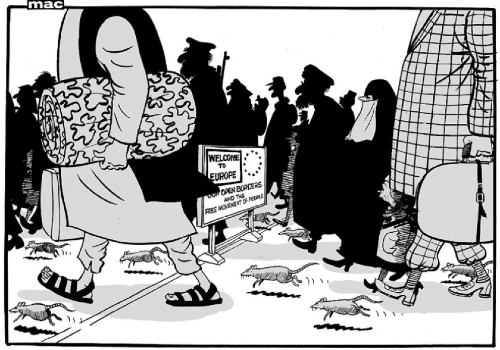
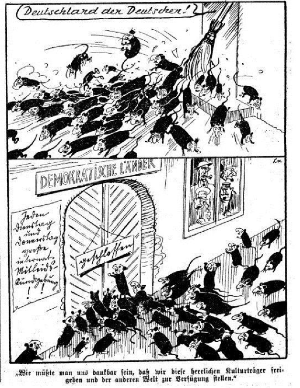
Likewise, the Daily Telegraph’s long‑standing Euroscepticism, once an obsession of a relatively narrow Tory intelligentsia, has over time drifted closer to Mail‑style culture‑war rhetoric on Europe, immigration and “woke” topics. In different voices, both papers are doing a similar job: telling their audiences where to focus their resentment, and who is supposedly to blame for a complex, unequal country.
Murdoch’s succession arrangements show how little this is about passing the torch to a neutral manager and how much it is about preserving a project. In testimony during the family trust battle, he said outright that he wanted his “most conservative” son in Lachlan Murdoch to assume control of Fox and News Corp because it was vital for the outlets to maintain power through convincing the public to vote in favour of wealth and power.
Both the continuity of behaviour, and the succession arc of these papers show an obvious truth about the UK's print media; proving it becomes the responsibility of the public. Calling this out has never been so essential.
See Jimmy the Giant's video for a more forensic analysis of this systemic influence.
Our Recurring Study
Today, Murdoch’s News UK controls around a third of UK national newspaper readership, Reach plc another third, and DMGT, including the Daily Mail, Metro, the i and the Telegraph titles, most of the rest, meaning that well over 90% of national newspaper circulation sits within just three ownership groups.
Add to that figures such as Lord Lebedev, owner of the Independent and the Evening Standard, and the son of a former KGB officer, who was given a life peerage by Boris Johnson, and rising television moguls such as Sir Paul Marshall, a key funder behind right‑leaning outlet GB News and other political media projects, and the grip tightens still further. This begs the question: how “free” is a press where a tiny handful of billionaires decide what most of us read and watch?
We will seek to gather data about the topics these shadowy figures are placing under our noses every morning when we check our news feeds, and the type of language they use along the way. The list of Newspapers that will be routinely interrogated are as follows:
1) The Daily Mail (Owner: Lord Rothemere)
2) The Sun (Owner: Rupert Murdoch)
3) Metro Free Newspaper (Owner: Lord Rothemere)
4) Daily Mirror (Owner: Reach PLC- Previously Richard Desmond)
5) Daily Express (Owner: Reach PLC- Previusly Richard Desmond)
6) The Times (Owner: Rupert Murdoch)
7) The Daily Telegraph (Owner: Lord Rothemere as of 2026, Previously the Barclay Family)
8) The Guardian (Owner: The Scott Trust)
9) The i Newspaper (Owner: Lord Rothemere)
10) The Financial Times (Owner: Nikkei inc)