
How I Escaped the Politics I was born into...
Told to stay quiet, surrounded by prejudice, I was almost swallowed by far-right politics. This is how I broke the mould and forged a political identity of my own.
INTRODUCTION
In recent years, I have watched Britain shift into an increasingly hostile political climate. More and more people are being subdued by racist tropes and pulled towards the shiny turquoise promise of Reform UK, a party that disguises a harsher, more openly racist version of the politics that came before. Seeing this rise has made me reflect on my own journey; how easily someone can be influenced by their environment, their upbringing, or the voices they hear online.
What finally pushed me to write this was a video by Jimmy the Giant, who spoke openly about escaping the far-right pipeline. His honesty reminded me how important it is to tell these stories. Mine is not perfect or neat, but it is real. And sharing it feels necessary now more than ever.
Watch Jimmy the Giant tell his political story!
EARLY LIFE
I was born at New Cross Hospital on 26 November 2000 and spent my early childhood living with my mother, seeing my father only on weekends. Money was tight. My mother raised my younger brother and me alone, relying on child benefit to cover our food and clothes. We never had much, but she did the best she could.
When I was around seven years old, I woke one morning to find a man standing on the landing of our house. He would eventually become my stepfather. He quickly grew close to my mother, moved into our home, and soon after they were married. His arrival brought with it a very different atmosphere. He was outspoken in his political views and often expressed harmful opinions about ethnic minorities, particularly Muslims. He used racial slurs casually, weaving them into everyday conversation as if they were harmless jokes. His views on women and children were similarly outdated and rigid. My mother, who had grown up in a conservative household, supported the notion that "children should be seen and not heard", and together they enforced those rules strictly.
I remember being sent to bed at six o’clock, watching other children play outside on their bikes while I stared at them from the landing window, wishing I was sharing their experiences. Even going downstairs for a drink would be met with shouting: “Why the fuck aren’t you in bed?” Childhood, for me, was something distant, something other kids got to have. I learned early to stay quiet, keep out of the way, and grow up fast, and merely exist in the background of everyone else's life.
This environment shaped me deeply. Friendships never came easily. I struggled to make and maintain friendships, and when I did manage to connect with people, I often felt as though I pushed them away. Looking back, I can see parallels between my behaviour and the way my mother had gradually become isolated from her own friends. It was learned behaviour, absorbed through years of being silenced.
By the age of thirteen, I had had enough. I made the decision to leave and go live with my father and my stepmother. Although she had made it clear that she had never wanted children, she took pity on me after I arrived at their home with little more than the shirt on my back. For the first two years, they avoided having their friends over because I struggled to cope socially. I remember my father once taking me to the Angel Inn Indian Bar and Grill pub with a group of his friends. I felt out of place and could not join the conversation, so I sat alone in silence. My father assumed I was bored and took me home; but I assumed I was there to be "seen and not heard".
At Pool Hayes Academy, I drifted through school like a spare part. I tried too hard to be funny to hide the fact that I had no idea how to make friends. I floated between groups, teased for being the odd one out and mocked for my weight. On the last day of school, while everyone took pictures and marched off to a field to celebrate, I walked straight to my dad’s car and went home. I sat in my room, scrolling through my iPhone 6, practicing guitar, and talking to family members online. I had been doing that since I was about thirteen.
And it was there, in that lonely, quiet, depressing bedroom, that politics entered my life for the first time.
FIRST POLITICAL ENGAGEMENT
My early exposure to politics came through social media. Because many members of my extended family held racist or xenophobic views, posts from figures like Tommy Robinson regularly appeared on my Facebook feed. They echoed the ideas my stepfather had spoken so freely when I was younger. Now the same narratives were reaching me again, but this time through a screen, without anyone present to challenge them.
I had no critical framework to understand what I was seeing. I did not know who the other political voices were, nor did I understand the broader landscape of opinion in Britain. During those years, I spent long stretches of time in my bedroom, alone with the internet. It became the place where I started engaging with politics, though without realising where it was leading me.
Looking back, I would say I became “far-right curious”. It was not a fully formed ideology, but rather a sense of curiosity mixed with grievance and a feeling of finally being spoken to. For someone who had grown up feeling voiceless, that was an easy trap to fall into.
TURNING “LEFT”
By the time I started sixth form at sixteen, I had spent three consecutive summers absorbing far-right content. I felt emboldened, convinced I had something meaningful to say. Socialising at sixth form felt like a new beginning, and I became friendly with a group of girls in the year above me. Sometimes other lads from my year joined us, and inevitably the conversation would turn to politics. Believing this was my chance to prove myself, I repeated soundbites I had seen online.
The response was immediate. The girls told me, often directly, that the comments I was making were bigoted. They were politically engaged themselves and supported Jeremy Corbyn, especially in the years following the divisive Brexit referendum. Instead of dismissing me, they challenged me. They sent me government documents, articles, and counter-arguments. Most importantly, they encouraged me to learn.
And I did. Gradually, my social media algorithms balanced out. I began reading news from a variety of sources. I engaged with content from The Canary, Novara Media, and Labour Party communications. I started to see past the rhetoric I had consumed for years. I realised that the hardships in my life were not caused by a state failing to control Muslims, but were shaped by social conditions, inequality, and the political decisions of those in power. I became a committed supporter of Jeremy Corbyn and an outspoken opponent of racism. The more I learned, the more I recognised how deeply social conditioning had shaped my earlier views. I embraced redistributive economics and the principles of workers’ rights. Before long, I had become what many would call a “lefty”.
I joined the Labour Party after Boris Johnson became Prime Minister on the promise to “get Brexit done”. Then came the pandemic. The UK’s disastrous lack of preparedness became painfully real for my family on 8 March 2020, when my nan died in New Cross Hospital as only the 4th person in the UK to fall victim of Covid-19. The doctor told us the hospital was not prepared for an outbreak of that scale and that she posed a risk to other patients. They switched off her ventilator, and our lives changed forever.
For years, I have argued that her death cannot be separated from the decade of austerity pursued by the Conservative government, proven by the result of the recent Covid inquiry. Yet my grandad, a lifelong Tory voter, defended Boris Johnson relentlessly. The Sun, owned by Rupert Murdoch, had shaped his political worldview for decades. Watching him defend a politician whose governance had contributed to his wife’s death radicalised me further. He is a deeply religious man so his faith is important to him; but with that, brings gullibility. His troubles began when my Nan retired on ill-health from New Cross Hospital, and they struggled to make ends meat. One of his neighbours said if he sold their house to him for a fraction of the price he would let them live there at low rent for the rest of their days. A month later, he evicted them. What I am trying to say from this experience, is that I then became not only pro-Labour, but also profoundly sceptical of right-wing media, the power it holds, and its influence on people without a pot to piss in.
At university, I studied History. One module in particular transformed my understanding of class, culture, and the lives of working-class people in twentieth-century Britain. Taught by Dr. Keith Gildart, it traced the rise of Thatcherism, the destruction of organised labour, and the deepening of inequality. That historical context solidified my political beliefs and helped me understand how individual experience fits into broader social and economic patterns.
After graduating, I worked at a local builders’ merchant company, run by a friend of Andy Street and Boris Johnson. It was there that I saw first-hand how low-paid workers were treated. Whenever the minimum wage increased, the directors attempted to reduce our hours, despite the company posting record profits according to companies house (and the fact they, repeatedly, bragged about it to us, even in the letters that said we were having our hours reduced). Those experiences pushed me to pursue political work with even more determination. Although my early job applications were unsuccessful, the motivation to make a difference only intensified.
I chose to continue my studies and began a Master’s degree in International Relations. I became an avid reader of political literature, developing a deeper understanding of global politics, policymaking, and theory. Rather than clinging to rigid ideological labels, I learned to appreciate nuance. While I still support redistributive economics and oppose neoliberalism, I now understand the importance of coalition-building, compromise, and pragmatic governance. Some people might call that “soft left”, but to me it is simply a more balanced and informed approach.
BECOMING ME
Today, I no longer define myself through ideology alone. I still believe strongly in economic fairness, and I remain critical of a system in which financial markets hold extraordinary influence over public policy. I believe inherited entitlement harms meritocracy, and I believe inequality undermines social stability. Yet I also understand the world is more complex than simple binaries allow.
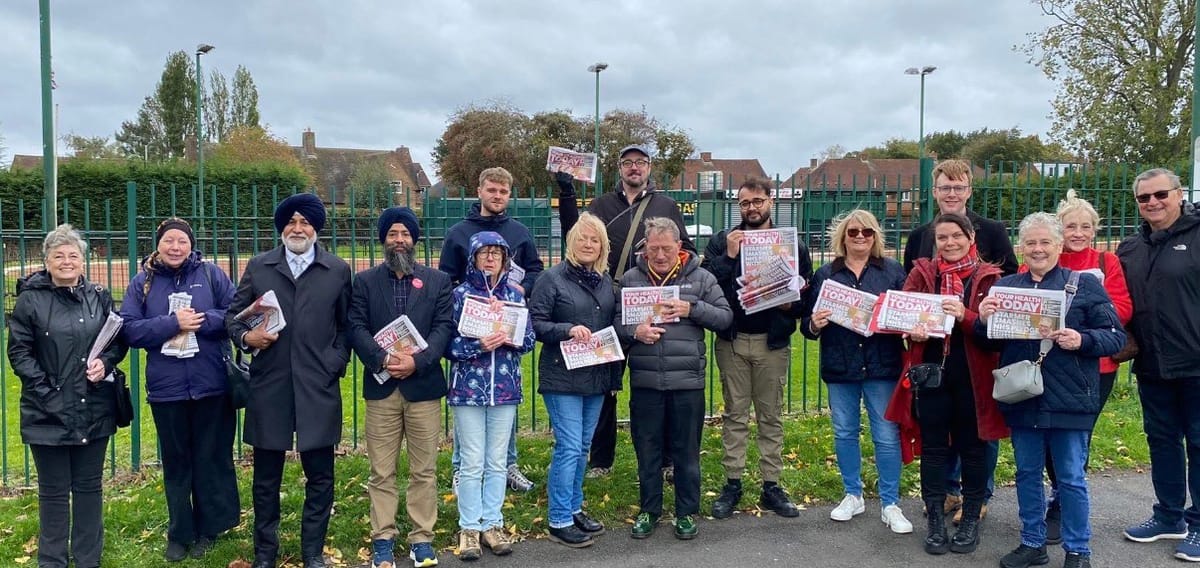
I still feel lost at times and often struggle with a sense of economic hopelessness. My political ambitions have not yet fully materialised, but I have not stopped pursuing them. I continue campaigning, connecting with trade unions and anti-racism groups, and applying for roles within the Labour Party and the wider labour movement. I am learning the difference between protest politics and the politics of governance. I am learning that change is slow, often frustrating, and always collaborative.
My journey has been shaped by hardship, confusion, loss, and self-education. It has also been shaped by the kindness of those who challenged my assumptions and encouraged me to learn. I am left-wing by instinct, but thoughtful by experience. I understand where I came from, and I understand how easily someone with my upbringing could have been pulled deeper into the far-right pipeline.
But I did not stay there. I learned, I changed, and I continue changing. This is not just a political story. It is the story of becoming myself.
 Jacob Barclay-Evans
Read another one of my articles here!