Is John Healey a 'placeholder' Chancellor for Andy Burnham?
Number 11 is calm, the Budget is just a few days away, and one question won’t go away...
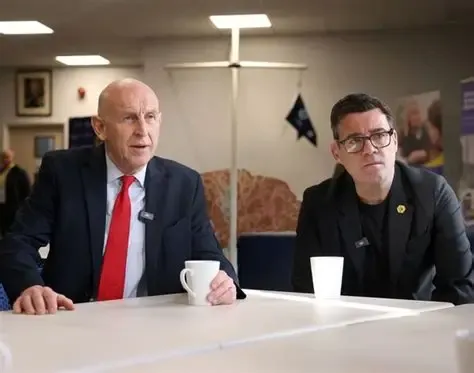
Cast your mind back to this time last year. Pre-Budget season under Rachel Reeves felt like a soap opera with the plot written by the chancellor herself. Anxiety was build as, day-by-day, the treasury leaked and speculated about the fiscal event in the media. Even with this year's budget fast approaching, Number 11 seems more serene, and is almost suspiciously quieter.
Some of that is surely the underlying confidence that has captured the Labour Party, and evidently some of the public in what is being described as the “Burnham bounce”. However, with inflation hitting 3.5% in September 2026 and the two major global conflicts showing no signs of resolving, it might come as a surprise that the British people haven't seen more of John Healey amongst the headlines announcing the bold ways he will address the structural problems faced in the UK.
Because the UK requires somebody with the courage to meet such a challenging moment to break the spell of managed decline, this raises the question: why Healey?
His appointment was a surprise. Westminster had expected a battle between Ed Miliband and Shabana Mahmood, and Healey steamrolled through the middle to seize the coveted ministerial position. Miliband went to the Foreign Office. while Mahmood remained Home Secretary.
One Conservative called the choice clever, given he’s Treasury-literate and therefore harder to attack. Healey's first speech in his role unveiled why Tories heaped praise unto him by claiming that his most core principle as chancellor is "fiscal responsibility" through constraining spending, a statement George Osbourne himself would tip his hat to.
Watch Healey's speech at Labour Party Conference 2026.
A stopgap budget?
Perhaps the biggest clue that John Healey might be keeping the seat warm for somebody with a bolder economic strategy is that he and the Prime Minister have both stressed that this will be a 'cost-of-living' budget to provide households 'a bit of breathing space'.
They have already cut VAT from electricity bills, and at Prime Ministers Questions on wednesday, Burnham announced to the house that he was asking the Chancellor to see if standing charges can also be removed from bills. Another relief measure, this time for small businesses, raises £1bn in tax revenue from online realters like Amazon to leverage a cut for the high street operators. There has also been movement from the treasury to raise the surcharge on bank profits from 3% to 8%, given the top 4 banks have made £15bn in profits in the first 6 months of 2026.
However, Healey has ruled out what might be considered a more heterodox economic solution in equalising capital gains tax with income tax, as he fears that this would discourage private investment into the UK economy.
Previous left-leaning chancellors have taken the same approach, from Reeves increasing taxes on betting companies to fund the removal of the two-child benefit cap, or Gordon Brown's introduction of the Winter Fuel Allowance or Child Tax Credits. Herein lies what the Labour Party have seen as their default role since Margaret Thatcher gave financial markets unofficial control over the British economy through neoliberalism: to patch up the holes in the roof rather than rebuilding the house from the bottom-up.
This would be more understandable if Andy Burnham's ambitions for the UK were modest, but they go much further than papering over the cracks.
Ambition needs a strategy
Burnham wants to build a National Care Service, which a small adjustment to the triple-lock on pensions won't cover. He wants to build the biggest wave of council housing since Clement Attlee during the post war settlement. He wants to fund the defence investment plan. He wants to end rough sleeping "once and for all". Public ownership of water. Increased state control over energy. Reindustrialising through the green transition.
This is a large wishlist, set to remain unfulfilled given the administration's attitude towards this budget. A joint letter from the Chancellor and the Prime Minister told ministers there is no new money for the new pledges, insisting that fiscal credibility is the bedrock of their approach. This creates ideological tension between a prime minister, who once said that the government should be 'less in hock to the bond markets', wanting to break from the status quo and a chancellor who is hellbent on working within it.
Additionally, Burnham has also postured towards the Liberal Democrat leadership, who also put fixing social care at the forefront of their program, when he suggested rejoining the single market and customs union was an option to rip open the Brexit debate. Given Labour's increased poll rating would still leave them short of a majority in the commons, the Prime Minister would need the support of a coalition partner to govern, to deliver on his vision. Despite initially ruling out a snap election, his overtures to Ed Davey hint at one, and a fresh mandate would be the natural moment to swap a caretaker chancellor for one that fits this joint platform.
Why Healey's orthodoxy will fail long term
Critics will say any break from orthodoxy invites a Truss-style gilt meltdown. Net debt is nearly £3 trillion, 93.8% of GDP, and the government paid a record £8.8bn in debt interest in August. But when Attlee’s government built the NHS, the welfare state and council housing, debt stood at 252% of GDP, more than two and a half times today’s level.
That doesn’t mean there are no constrains, but the debt ratio isn’t the binding one. Inflation and real resources are. This makes Healey’s caution a choice rather than necessity. A chancellor who treats the market’s reaction as the main constraint will set policy to avoid it, while one who can communicate the real limits can shape credibility. Truss failed for lack of a forecast, a plan and a trusted institution to vouch for it, not due to heterodoxy. Healey is the first kind of chancellor, which is exactly why he looks like a placeholder: after a coalition-forming election, a new government needs a chancellor aligned with Burnham, and Ed Miliband is the obvious candidate.
If Wednesday brings a rewrite of the fiscal rules, a serious shift of savings towards investment, Bank of England reform, or a tax overhaul that goes beyond the usual fiscal tinkering, I’ll gladly eat my hat. If it brings caution to the extent that it lacks serious ambition, it suggests the political arena will need a shake-up to address the rampant inequality that has populism snapping at the government's heels.
 Jacob Barclay-Evans