Labour have a NEW 'comms' problem under Andy Burnham
The newly minted Prime Minister has claimed he intends to end 40 years of 'neoliberalism', a promise that could come back to bite him.
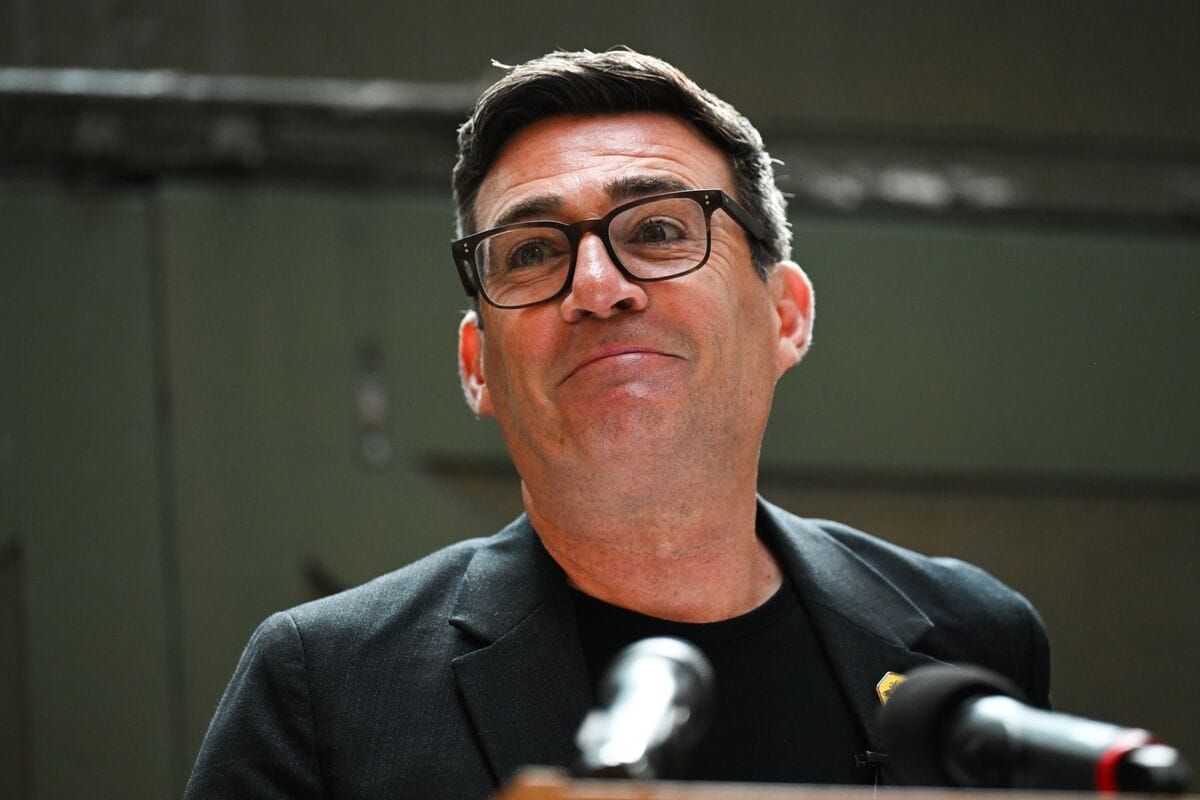
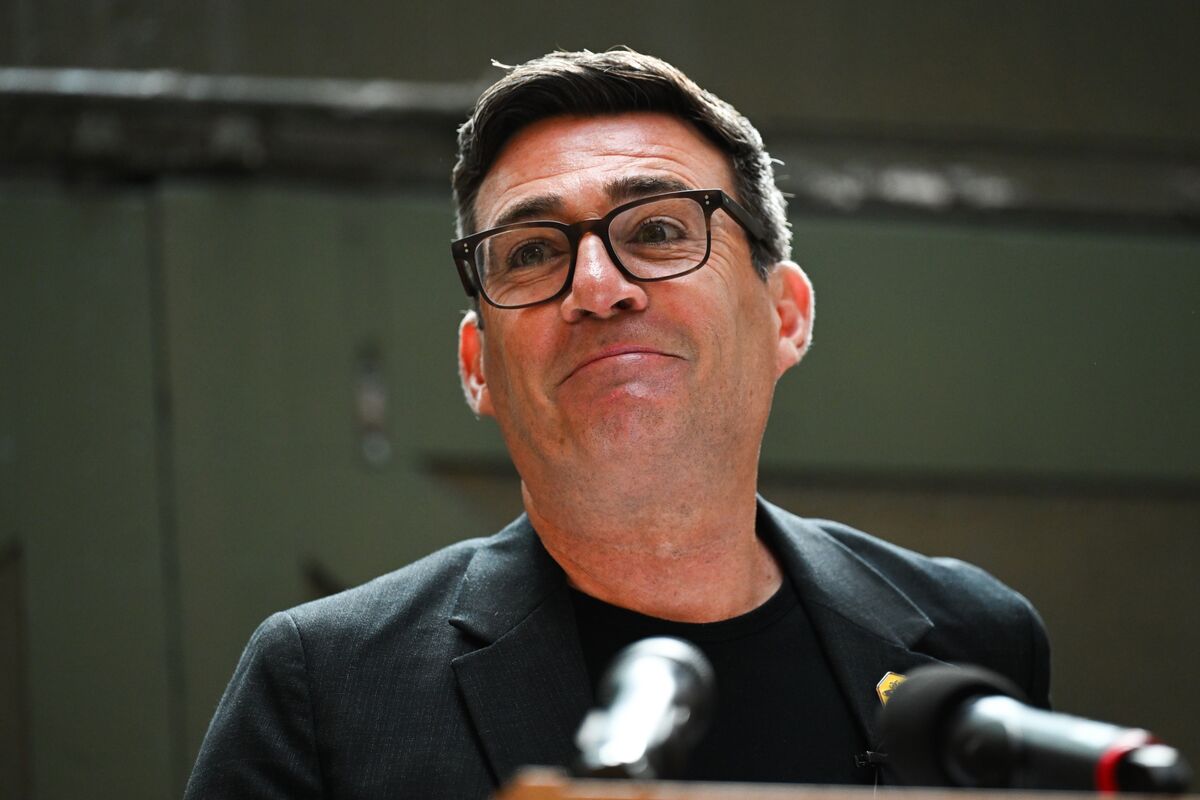
Communications strategists within Labour have rushed out of the traps to claim that replacing Kier Starmer as Prime Minister with a slicker political operator has cultivated a 'Burnham Bounce'. Since claiming his premiership in a carefully staged political heist, Andy Burnham has wasted no time in outlining a Manchesterist direction to take the country in, starting with providing people with 'breathing space' to bring back hope.
Making a slew of small announcements every day such as removing VAT from energy bills or providing relief for recreational venues, Labour's top man set his chancellor up to deliver a budget which was the best received since 2021. Even his harshest critics would struggle to deny that this has been successful, with the Labour Party now averaging 28.6% in the polls as the frontrunner to win the next general election- up nearly 10 points on the previous year.
However, although the current trajectory of public discourse suggests a slight return of political good will, the Prime Minister has many questions left to answer regarding how 'Manchesterism' will revitalize a stagnated UK economy.
The by-election that would inevitably propel the former Mayor of Greater Manchester revealed some of Burnham's solutions: build the biggest wave of council housing since Attlee to reduce Housing Benefit, public 'control' of utilities, and to address the cost-of-living crisis.
When he assumed office, his promises became bolder still. On his first day as Prime Minister, he promised to end rough sleeping once and for all in the UK. He promised greater devolution across England and Wales. He's made huge arguments on welfare, relations with the EU, funding defence, and of course, he unveiled his flagship National Care Service policy in his first speech at Labour Party conference as leader, all of this under the umberella of ending 40 years of neoliberalism.
Ending 40 years of neoliberalism is a tough ask, given that the very nature of the ideology was to sell public services, such as utilities, to the private sector and letting the market set prices shareholders saw fit. This has left the UK in a spiral unaffordable energy bills, thus reducing public spending power, and soaring government debt interest due to a lack of stable assets to shelter times of crises, meaning it has little means to buy them back under conventional economic thinking.
The phrase doing the heavy lifting is "public control". To anyone not glued to Westminster it sounds like nationalisation by another name. It isn't. Nationalisation means the state owns the asset. Public control means the state sets the rules, such as prices, standards and investment priorities, while the asset can stay in private hands. One changes the owner, the other changes the regulator.
Burnham's record shows which he means. The Bee Network is a real achievement, and TfGM data suggests its buses are more on-time than privately run services. But private companies still operate them, while routes and fares are decided by the combined authority. That is re-regulation of the 1986 market, not a reversal of privatisation.
Louise Haigh has now said as much herself. On Sky News, she noted that Labour "famously" lost the election on which Corbyn offered nationalisation, and called that manifesto "far too far" and "unrealistic". While Haigh lambasted privatisation because "monopoly is not a market", public control, she said, "doesn't mean nationalisation". Her pitch was to "reassure business that this isn't full fat nationalisation". Conversely, the government will seek a "public-private partnership", though she did not rule out "intervening" with public ownership where markets have failed.
His plan for housing has followed suit. The sweeping promise of a post-war socialist housing renaissance seems to have ended up being a slightly reformed version of Starmer's policy, which allocated £39bn for affordable housing, 60% of it for social homes. The language has slipped too. Burnham now speaks of "genuinely affordable homes, most of them for social rent", but "affordable" means up to 80% of market rent, which is not what a council tenant pays.
Then there is Europe. At conference Burnham said Britain could consider a customs union, the single market, "or we could go all the way", reopening a debate that prime ministers had avoided. The government has even appointed Juergen Maier as Northern Growth and Reindustrialisation Commissioner to court those places.
He has since ruled out rejoining this parliament, which highlights the strategic risk. His most popular offers, like the National Care Service, speak to post-industrial towns that need public investment more than another argument about rejoining an institution renowned for the neoliberalism that left them behind in the first place. Every week spent on the single market is a week not spent on selling the policies that created the bounce strategists are falling over themselves to spin as a win.
Burnham could claim that he is hemmed in by a parliament, and a civil service, created in his predecessors image, constrained by the fiscal rules and inquiry reports of a project the PLP have already dubbed a failure. But in order for the former king across the water to reclaim his crown when election season rears its head, he will need to prove to the British public, that his ideas are as radical as he made them out to be when he delivers his 10-year plan this December.
 Jacob Barclay-Evans